
Displaying Customer Testimonials for Maximum Credibility
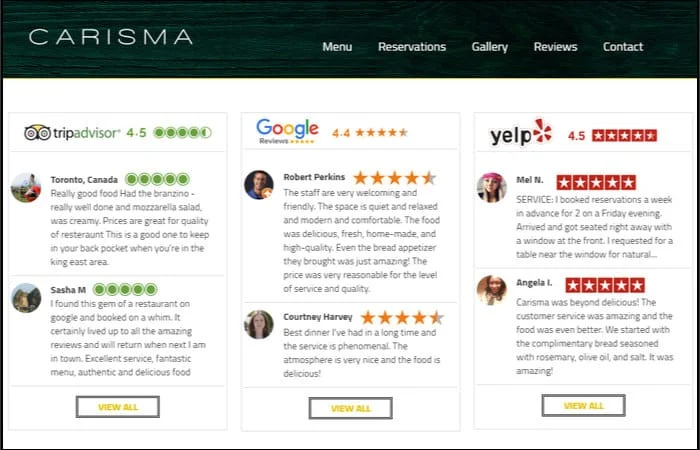
Visitors trust other customers more than they trust you. That's not cynicism—it's human
nature. Testimonials provide social proof that your claims are real. But poorly presented
testimonials waste their potential. Strategic display maximizes credibility and
conversions.
At Proton Tech Lab, we design testimonial displays that build trust. Let's explore how to
present social proof for maximum credibility.
Use Real Names and Photos
According to Nielsen Norman Group, testimonials with photos and full names
dramatically outperform anonymous quotes. "Great service! – J.S." could be fabricated.
"Transformed our business – Jennifer Smith, Marketing Director at Acme Corp" feels
verifiable and real.
Always ask permission to use names and photos. Most happy customers gladly agree
when asked directly after a positive experience.
Include Specific Details
Vague praise sounds fake. "Great company!" tells visitors nothing. "Increased our
conversion rate by 40% within three months" provides concrete evidence. Specific
results, timeframes, and outcomes create believable testimonials.
When collecting testimonials, ask customers about specific results they achieved. Guide
them toward details rather than accepting generic compliments.
Match Testimonials to Audiences
Different visitors need different proof. A small business owner relates better to
testimonials from other small business owners. Enterprise buyers want to see enterprise
clients. Place testimonials where relevant audiences will see them.
On service pages, show testimonials from customers who used that specific service.
Match the proof to the page's purpose.
Place Testimonials Strategically
Testimonials work hardest near decision points: pricing pages, checkout flows, contact
forms. When visitors hesitate, social proof reassures. A testimonial next to your call-to-
action addresses doubt at the crucial moment.
Don't hide testimonials on a dedicated "Testimonials" page few people visit. Integrate
them throughout your site where they support visitor decisions.
Use Video When Possible
Video testimonials carry extraordinary weight. Seeing and hearing real customers speak
creates connection text can't match. Video also proves testimonials aren't
fabricated—fake video is much harder to create than fake text.
Keep videos short—thirty to ninety seconds. Focus on specific outcomes and genuine
emotion rather than polished production.

Show Quantity and Quality
One glowing testimonial might be a fluke. Twenty consistent testimonials show a
pattern. Display enough testimonials to demonstrate consistent satisfaction, not just
cherry-picked praise.
Star ratings and review counts add quantitative proof. "4.8 stars from 150 reviews"
communicates satisfaction at scale instantly.
Address Different Concerns
Visitors have various objections: price, quality, service, reliability. Collect testimonials
that address different concerns. One testimonial about value, another about quality,
another about support. Cover the objections your audience likely has.
Keep Testimonials Current
Testimonials from five years ago suggest you haven't earned praise recently. Rotate in
fresh testimonials regularly. Date stamps can help—or hurt—depending on recency.
Recent testimonials demonstrate ongoing satisfaction.
Design for Readability
Long paragraphs of testimonial text get skipped. Pull out key phrases. Use quotation
styling that makes testimonials visually distinct. Design should make scanning easy
while highlighting the most compelling points.
Build Trust That Converts
Testimonials are among your most powerful conversion tools—when displayed
effectively. Real names, specific details, strategic placement, and thoughtful design
transform customer praise into persuasive proof that drives action.
Need help displaying testimonials effectively? At Proton Tech Lab, we design
websites that build trust and convert visitors. Contact us today to discuss your
website. Let's put your social proof to work!